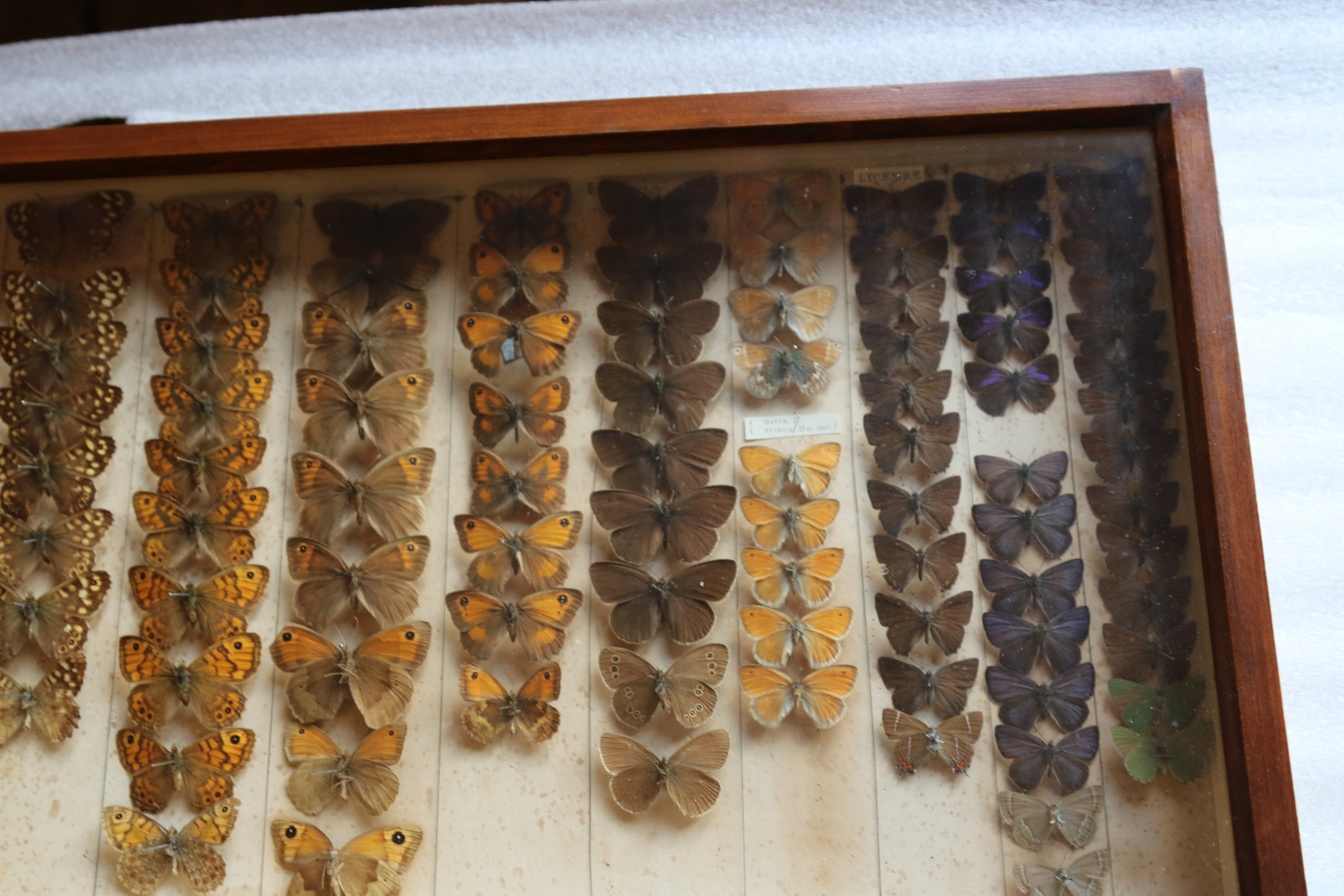
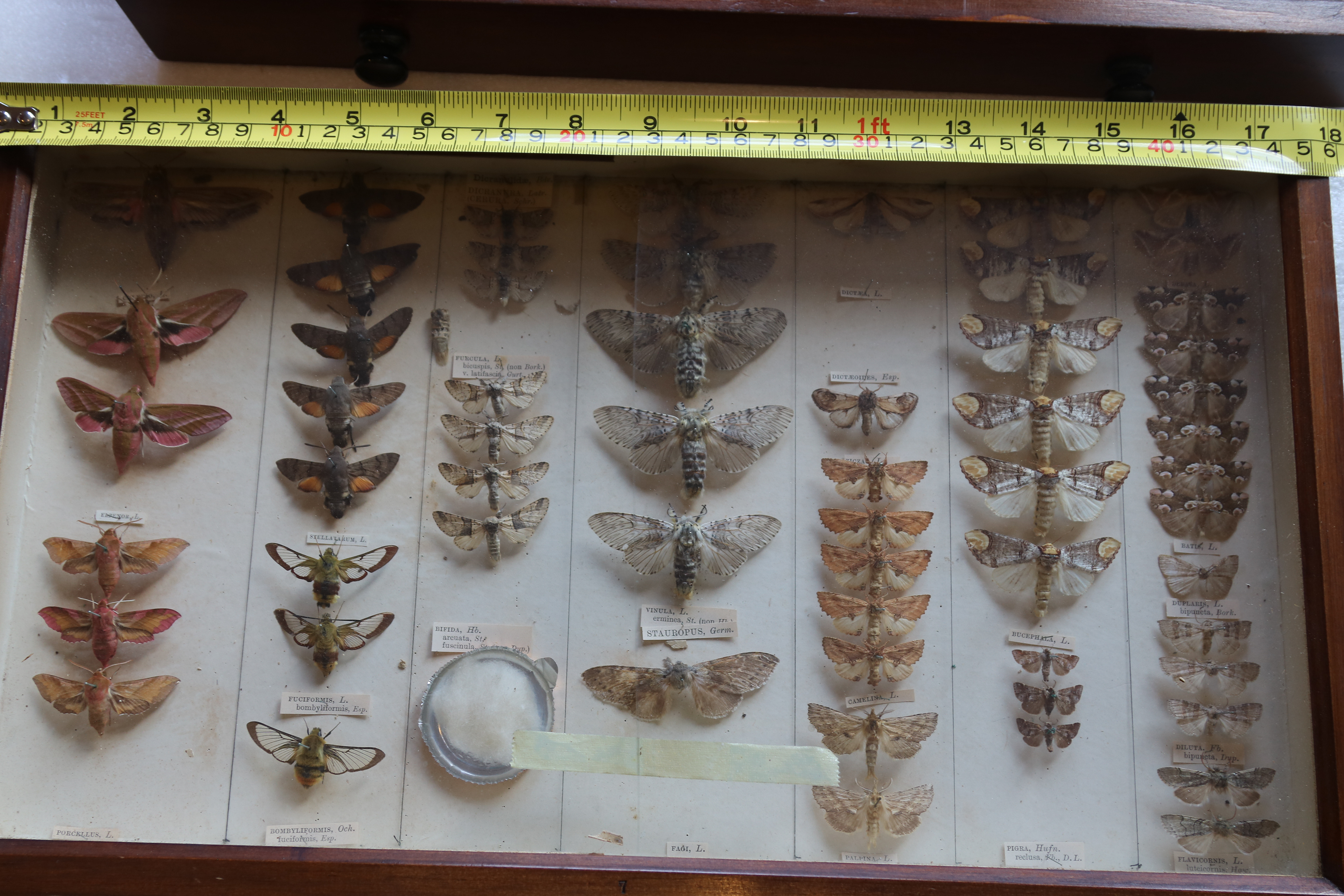
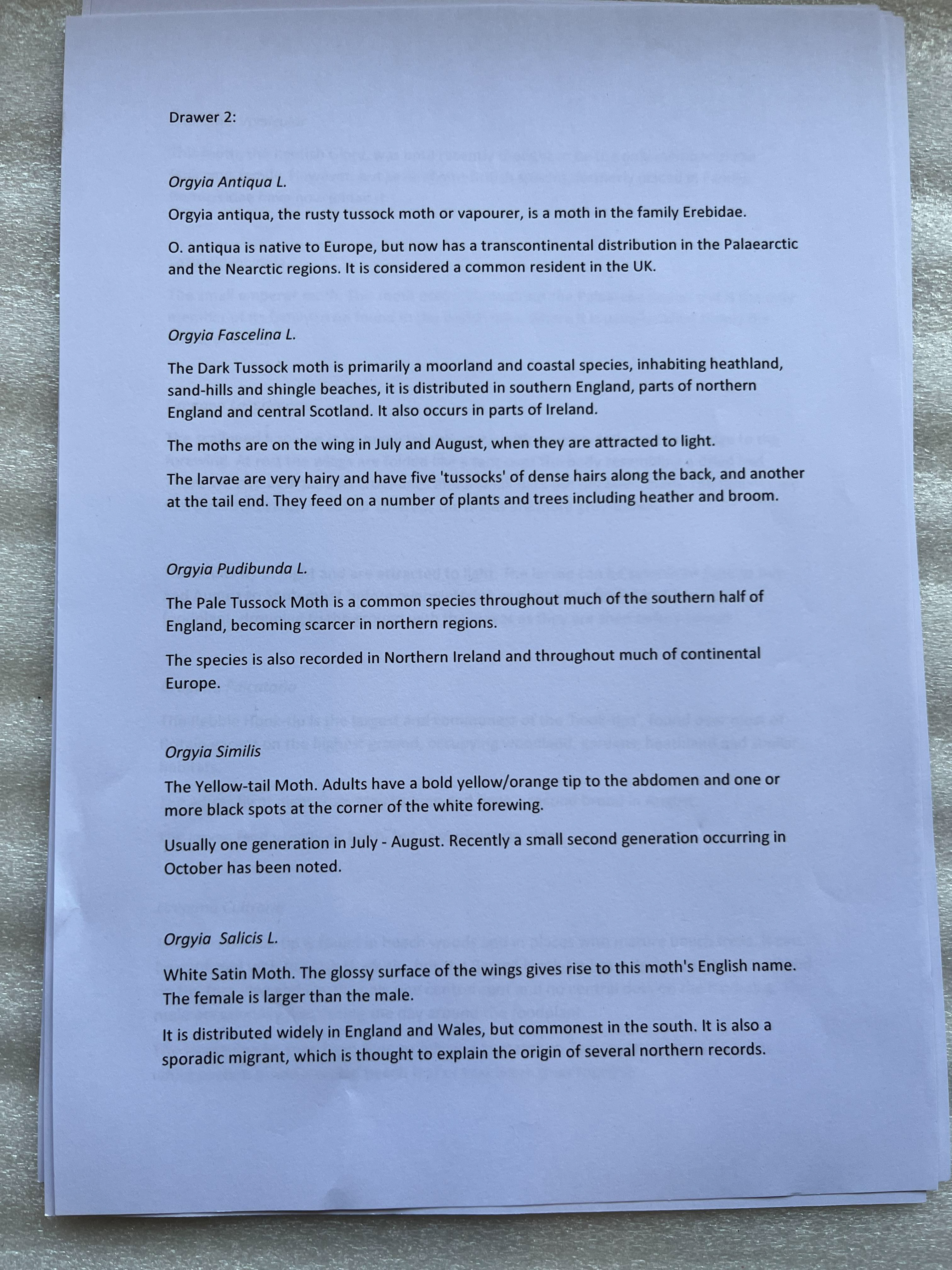
Visiting Stroud Museum to see their collection of local butterflies. I got in touch and after my first visit (Pics below) I got a reply saying they can access more butterflies and I’m looking forward to seeing more of their local and historical collection of butterflies. On my next visit hopefully March 2026 I will be; photographing, referencing, measuring (size difference then till now) possible colour differences from modern species.
Very helpful and a good start to my journey into the history of butterflies in the local area - Looking into areas including the declines / colour and size differences / Habitat loss /I will be gathering other information pertaining to how habitat has changed and where and how much difference this has had in the area where they were stopped now and then. I will be adding to my visual narrative with images research notes and recorded conversations.
Dear Georgia,
Thank you for your patience.
Please find attached a spreadsheet of the various butterfly collections we hold (and a few associated items).
I have highlighted in yellow the only collection which came to us between 1970 and 1990, although this is really a 19th century collection. I haven’t been able to find any further information on this collection in our electronic object history files, but I can check our paper records next week and let you know if I find any information pertaining to its field collection dates or locations.
As you will see from the spreadsheet, our collections are spread out over three locations: some on display here in the museum; some in our Stonehouse store and others in one of our stores in the centre of Stroud.
Please would you let me know which items you would most like to see and then we can arrange possible dates for a visit. If you would like to see specimens from both the Stonehouse and Stroud stores, we may be able to arrange to transport the Stonehouse specimens to Stroud for ease of viewing.
Our research visits take place during the week between Tuesday and Friday, so I’m sure we can find a convenient Friday.
Zoë
Zoë Wilcox (She/Her)
Documentation and Collections Officer
Stroud District (Cowle) Museum Service
Museum in the Park, Stratford Park, Stratford Road
Stroud, Gloucestershire. GL5 4AF
T 01453 763394
W www.museuminthepark.org.uk
Stroud, Gloucestershire. GL5 4AF
T 01453 763394
W www.museuminthepark.org.uk
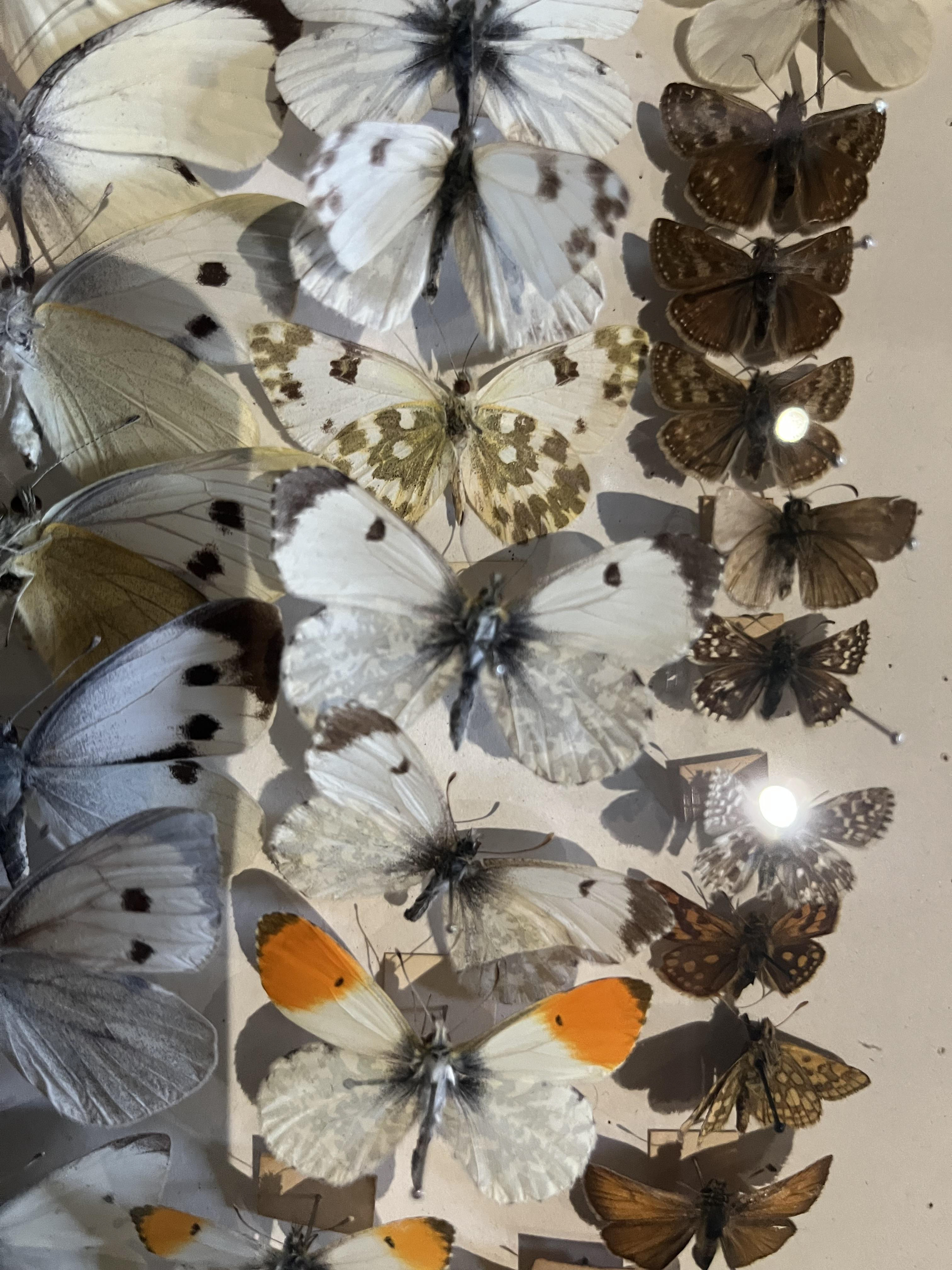
Stroud Museum Butterfly Collection 1960 -1990
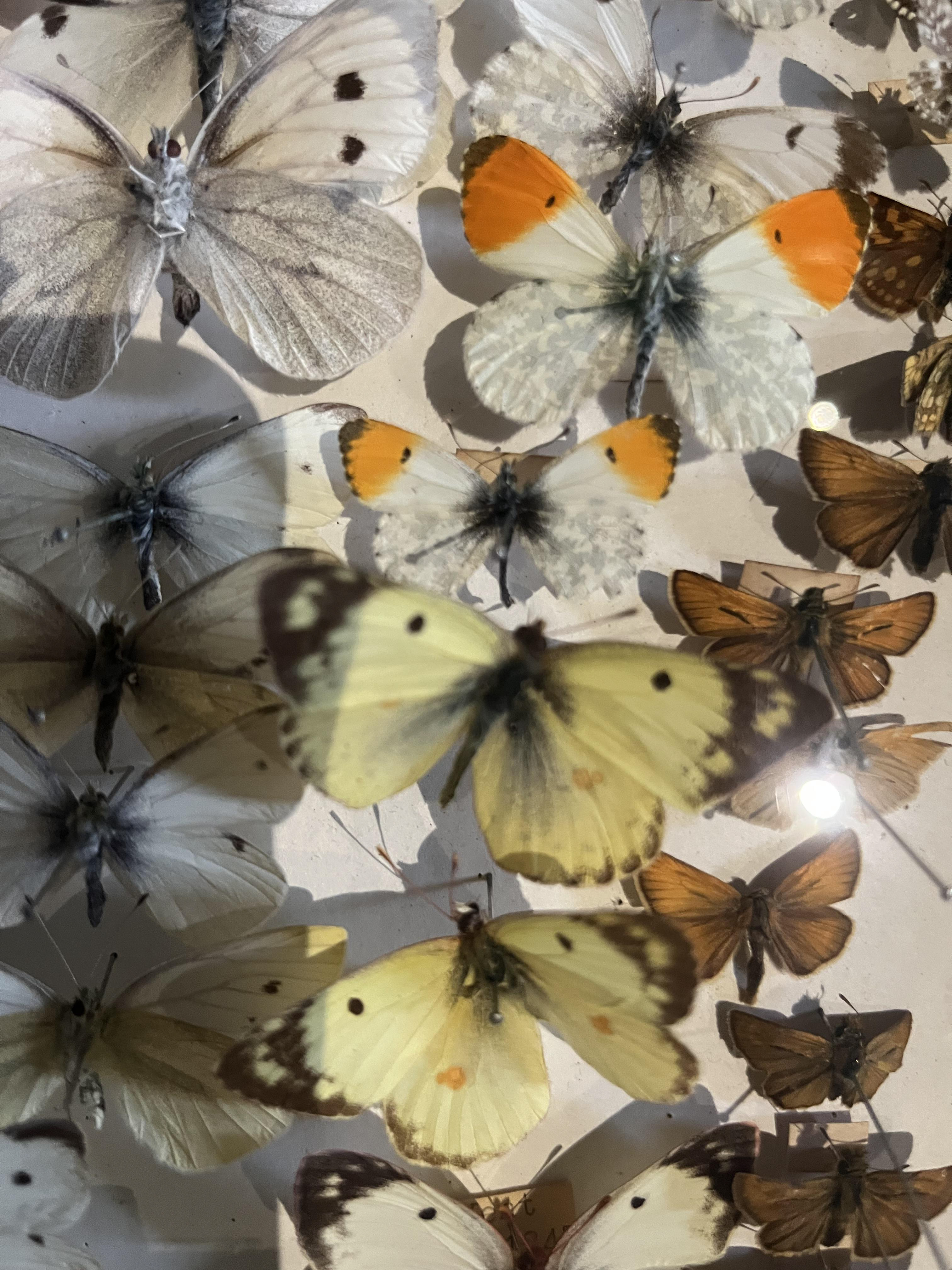
Stroud Museum Butterfly Collection 1960 -1990
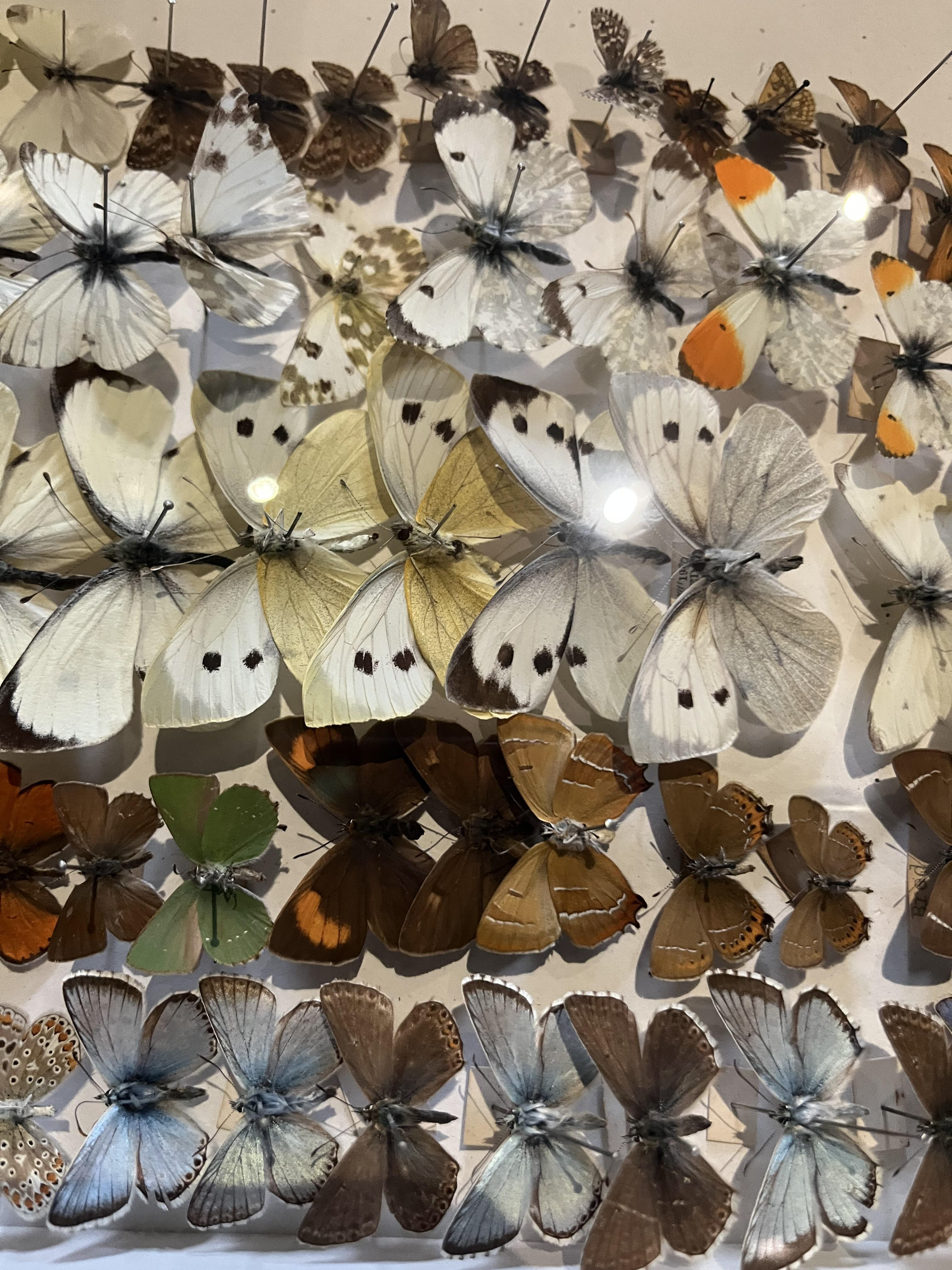
Stroud Museum Butterfly Collection 1960 -1990
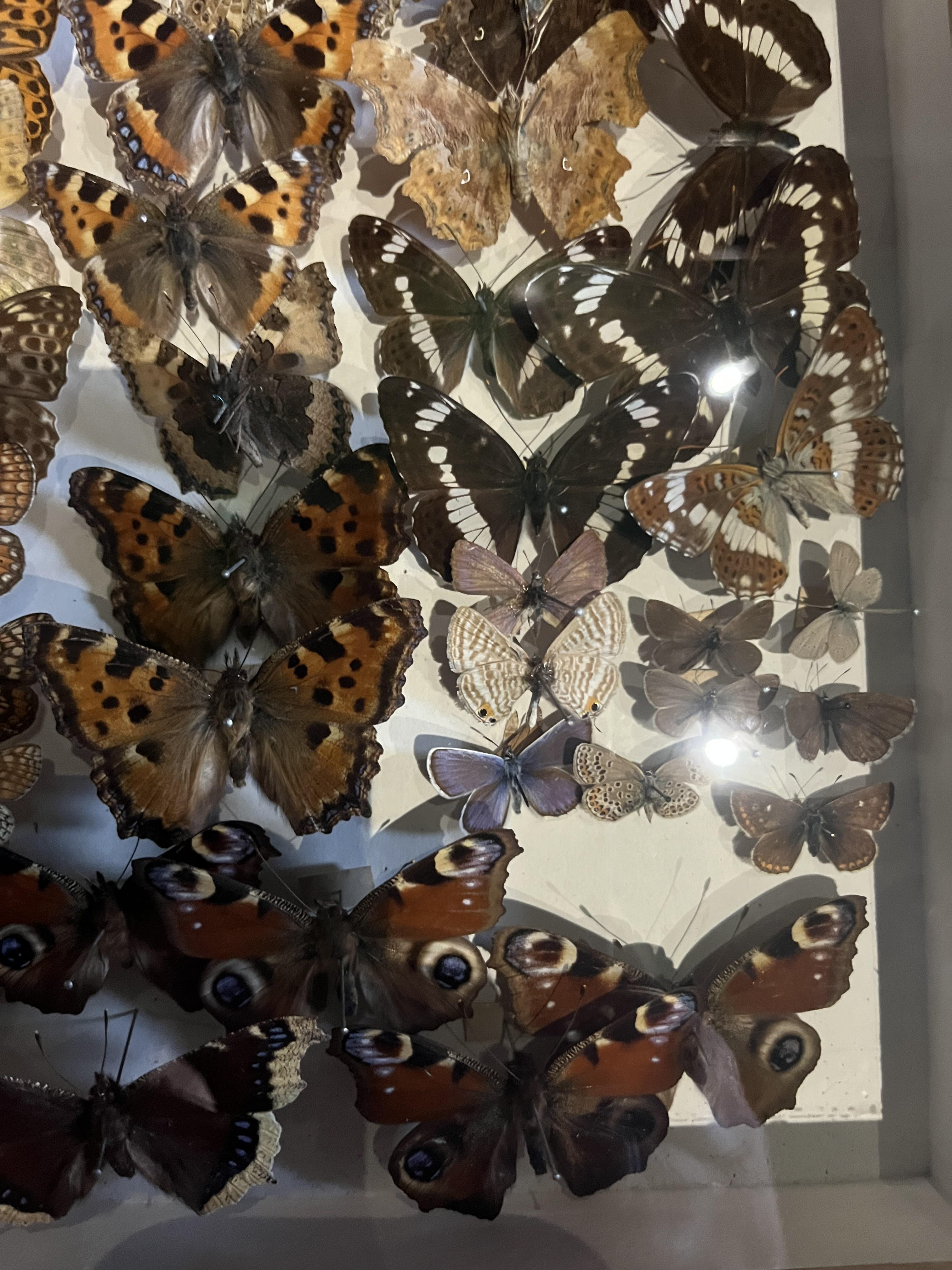
Stroud Museum Butterfly Collection 1960 -1990
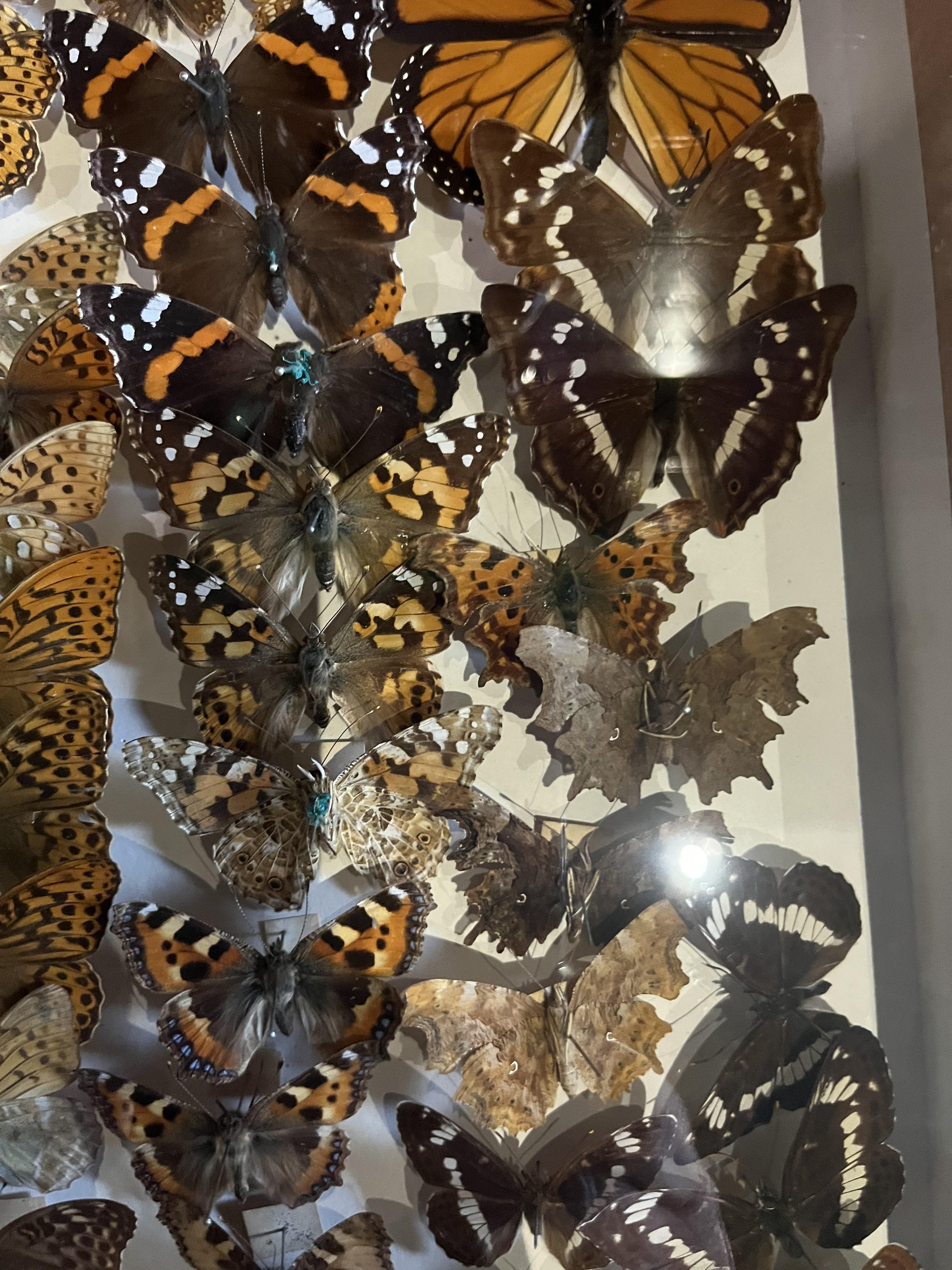
Stroud Museum Butterfly Collection 1960 -1990
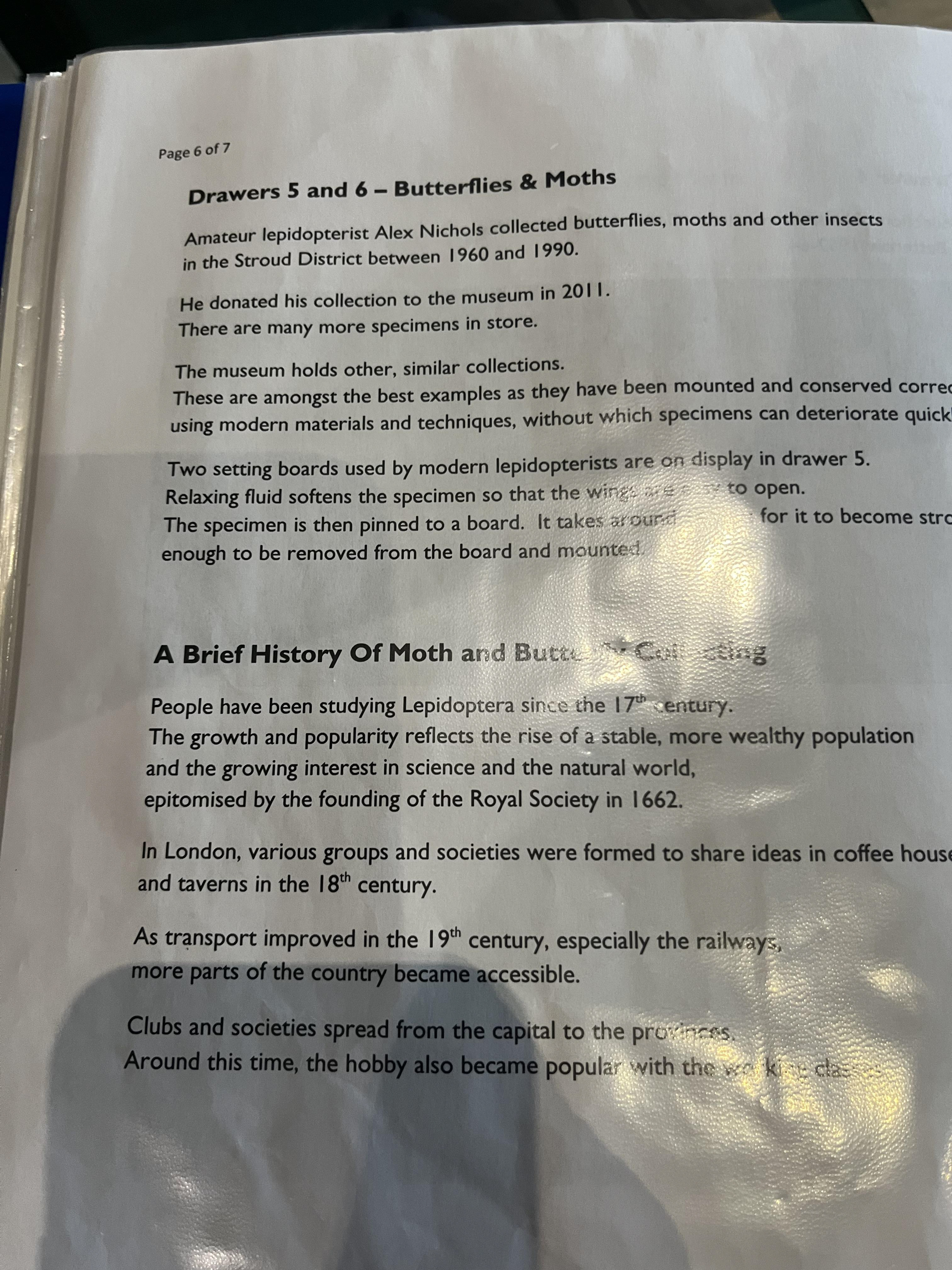
text from collector of Butterflies
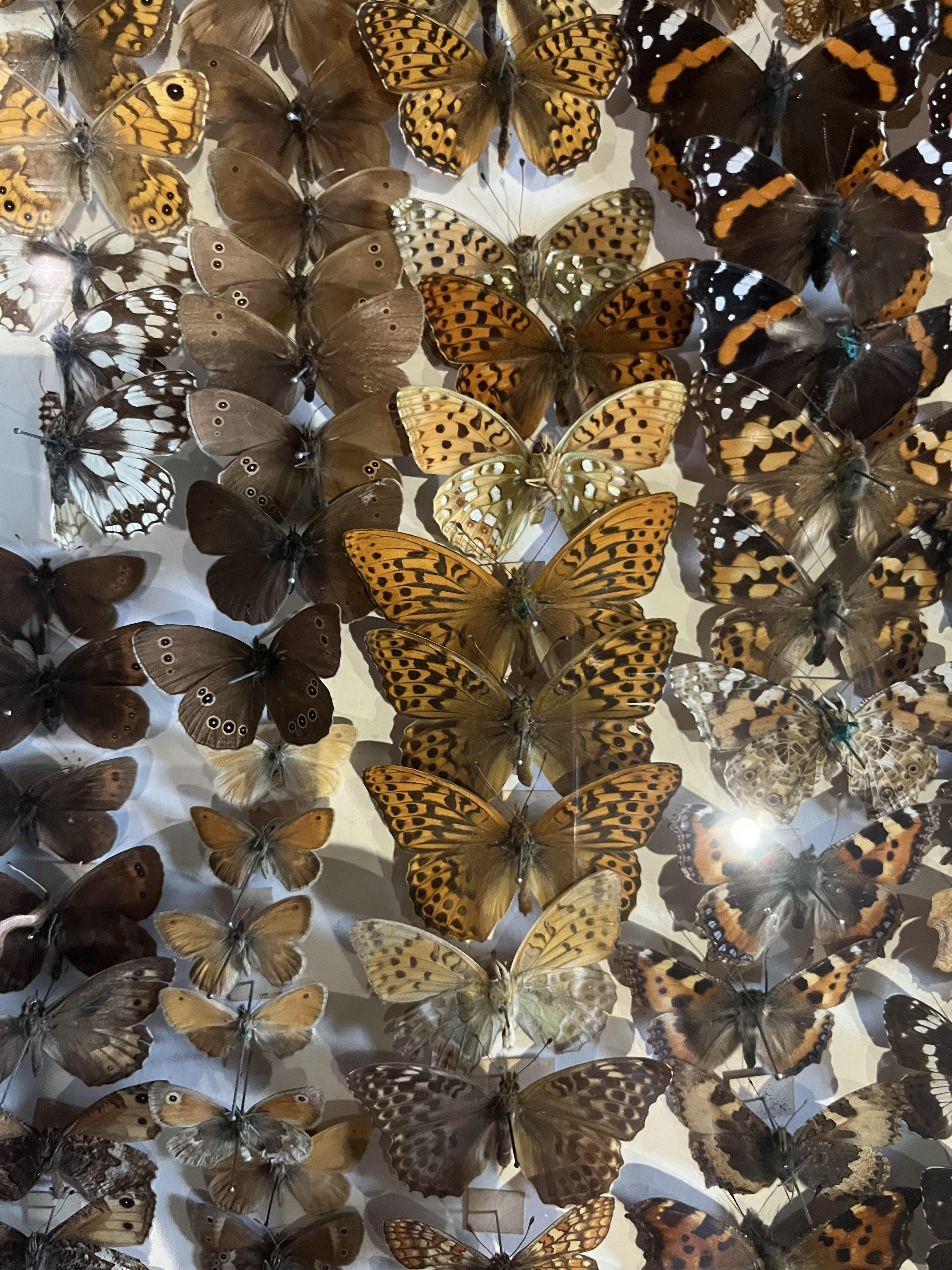
Stroud Museum Butterfly Collection 1960 -1990
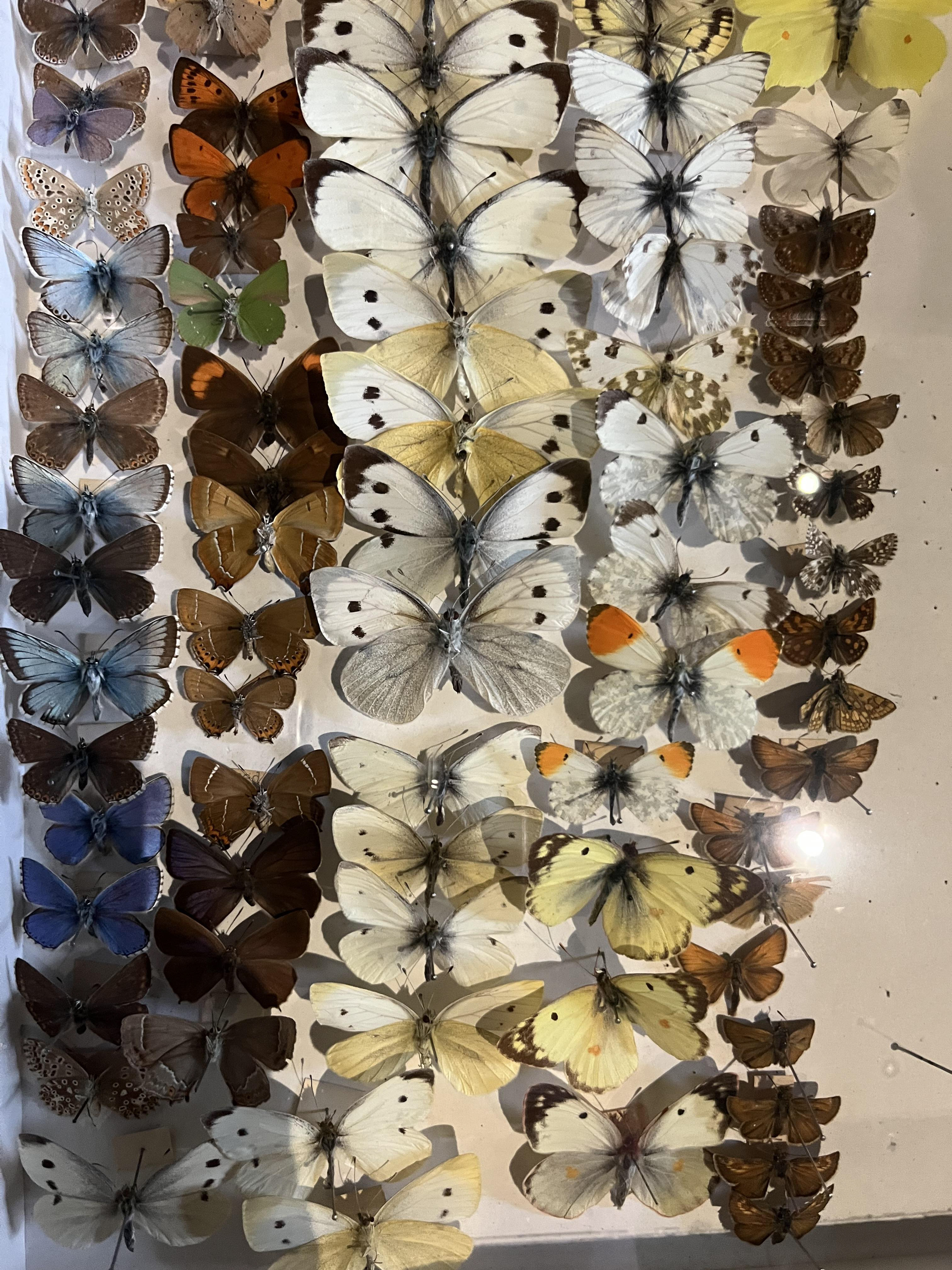
Stroud Museum Butterfly Collection 1960 -1990
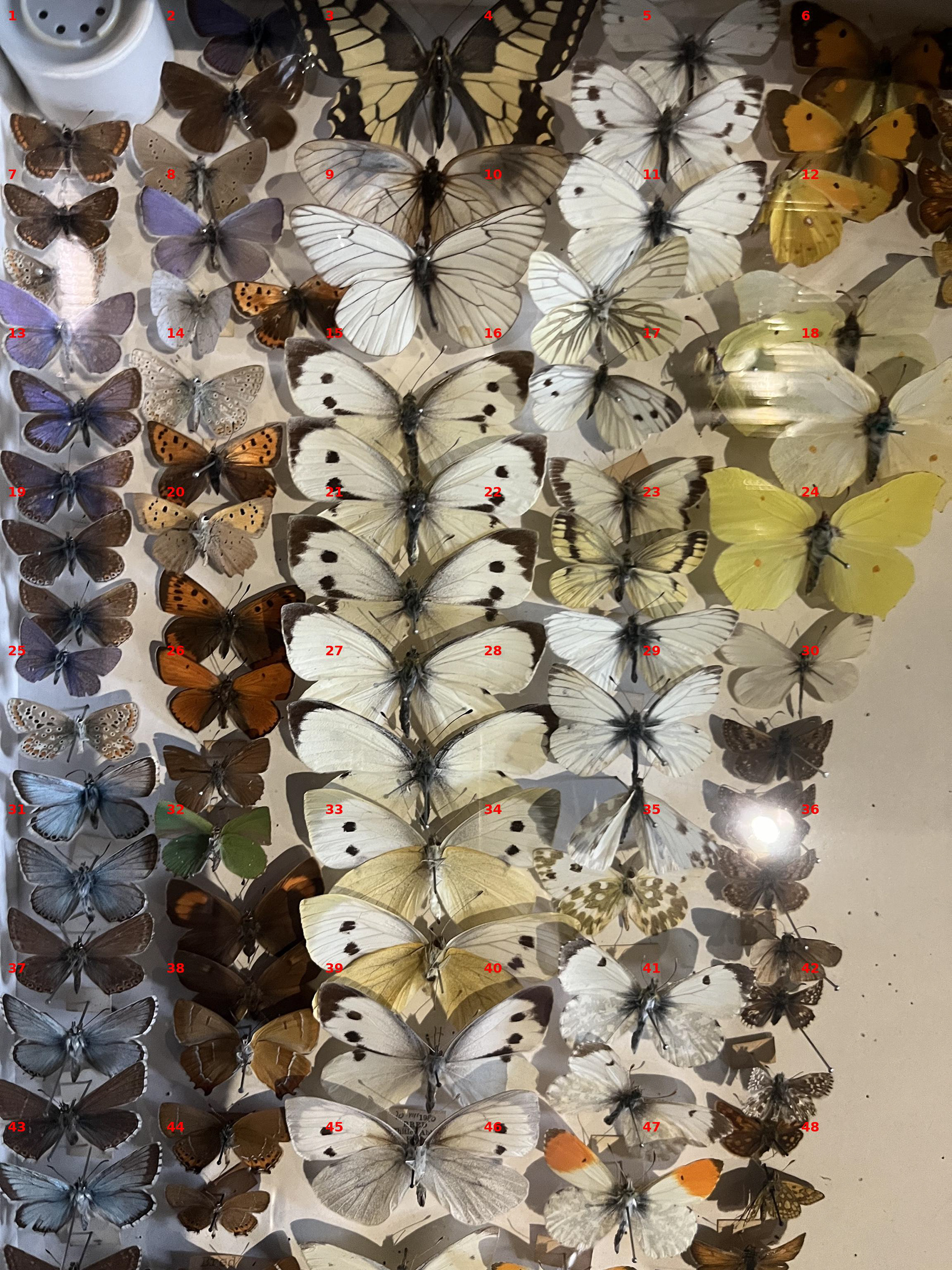
Annotated ID key (by number ranges)
1–8 (top row, centre-heavy whites & swallowtail)
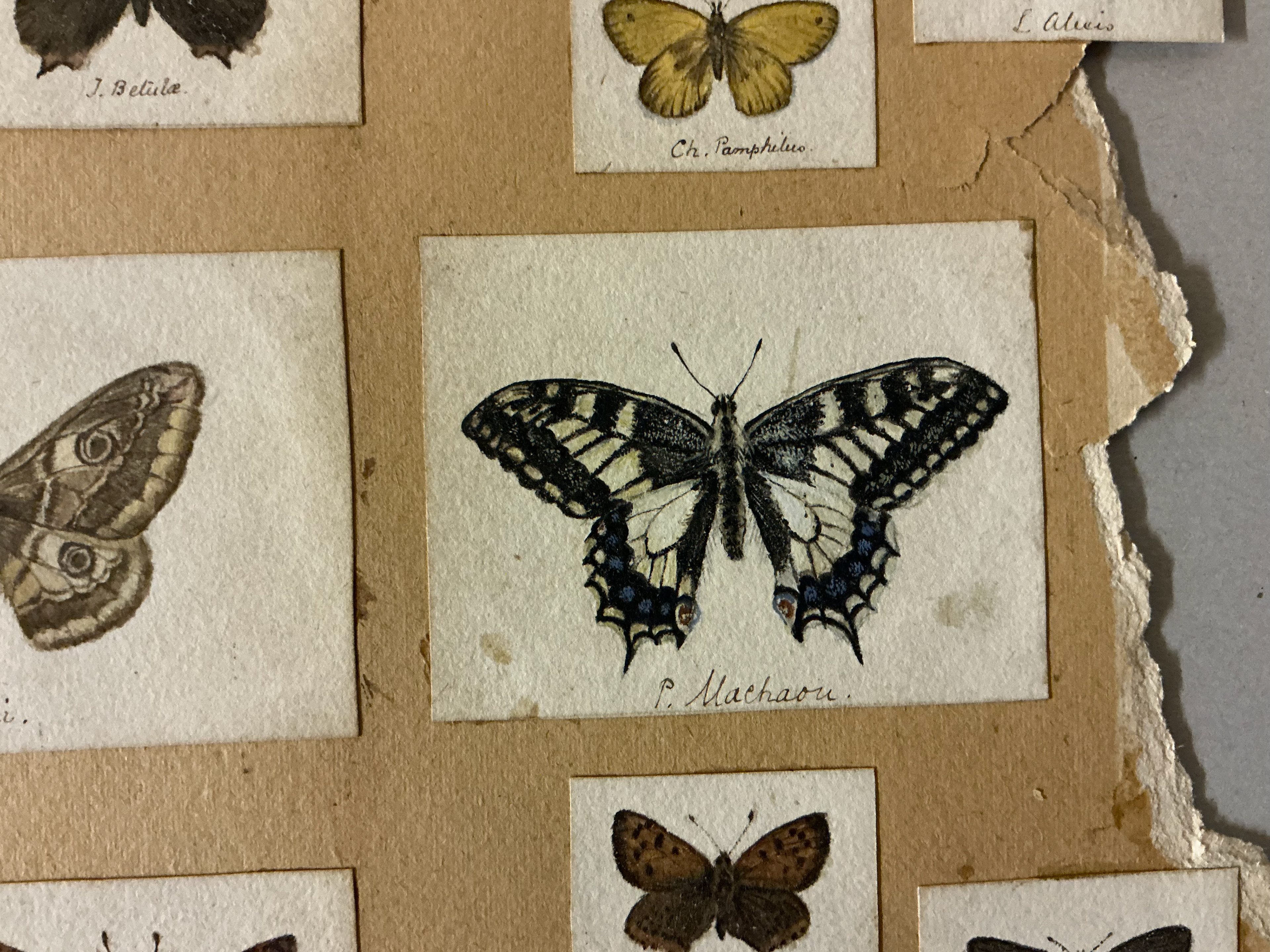
Old World Swallowtail (Papilio machaon) – very notable for Gloucestershire
Large White (Pieris brassicae)
Small White (Pieris rapae)
Green-veined White (Pieris napi)
🟡 Papilio machaon is the standout here — now extremely rare and local in the UK.
9–18 (second row, white variations)
Bath White (Pontia daplidice)
Green-veined White (multiple forms)
Wood White (Leptidea sinapis) – slim-winged
Bath White is now irregular / migrant-only in Britain.
19–30 (third–fourth rows, yellows & whites)
Brimstone (Gonepteryx rhamni)
Clouded Yellow (Colias croceus)
Pale Clouded Yellow (Colias hyale) – now very rare
⚠️ Colias hyale is no longer a regular UK breeder.
31–44 (blues, left side columns)
Common Blue (Polyommatus icarus)
Chalkhill Blue (Polyommatus coridon)
Adonis Blue (Polyommatus bellargus)
Holly Blue (Celastrina argiolus)
Brown Argus (Aricia agestis)
Several of these are still extant, but far more restricted in Gloucestershire than in the 1970s.
45–56 (browns, skippers, coppers)
Small Copper (Lycaena phlaeas)
Large Skipper (Ochlodes sylvanus)
Small / Essex Skipper (Thymelicus spp.)
Gatekeeper (Pyronia tithonus)
Meadow Brown (Maniola jurtina)
These are mostly still present, but abundance has shifted dramatically.
Are any of these extinct now?
❌
Globally extinct?
None in this drawer are globally extinct.
⚠️
Extinct butterflies or lost in Gloucestershire / UK context
Very likely present (high confidence)
Whites & Yellows (Pieridae)
These dominate the drawer.
Large White (Pieris brassicae)
Small White (Pieris rapae)
Green-veined White (Pieris napi)
Bath White (Pontia daplidice) – the green marbling is a giveaway
Brimstone (Gonepteryx rhamni) – leaf-shaped yellow wings
Clouded Yellow (Colias croceus)
Pale Clouded Yellow (Colias hyale)
Browns & Skippers
Mostly smaller, earth-toned species.
Small Skipper (Thymelicus sylvestris)
Essex Skipper (Thymelicus lineola) – very hard to separate visually, likely both±
Large Skipper (Ochlodes sylvanus)
Meadow Brown (Maniola jurtina)
Gatekeeper / Hedge Brown (Pyronia tithonus)
Blues (Lycaenidae)
Left-hand columns show classic UK blues.
Common Blue (Polyommatus icarus)
Holly Blue (Celastrina argiolus)
Chalkhill Blue (Polyommatus coridon) – pale silvery-blue males
Adonis Blue (Polyommatus bellargus) – deeper, electric blue specimens
Brown Argus (Aricia agestis)
Coppers
Distinct orange-brown tones.
Small Copper (Lycaena phlaeas)
Large Copper (Lycaena dispar) – possible, though rarer and would depend on provenance
Possibly present (moderate confidence)
Orange-tip (Anthocharis cardamines) – orange is subtle here but some white specimens suggest females
Wood White (Leptidea sinapis) – slim, elongated white wings
Marbled White (Melanargia galathea) – one patterned black-and-white individual
Emphasis on intraspecies variation (sexes, seasonal forms, underside vs upperside)
Very suitable for comparative morphology, pigment fading, or UV/IR work (which fits my PhD interests 👀)
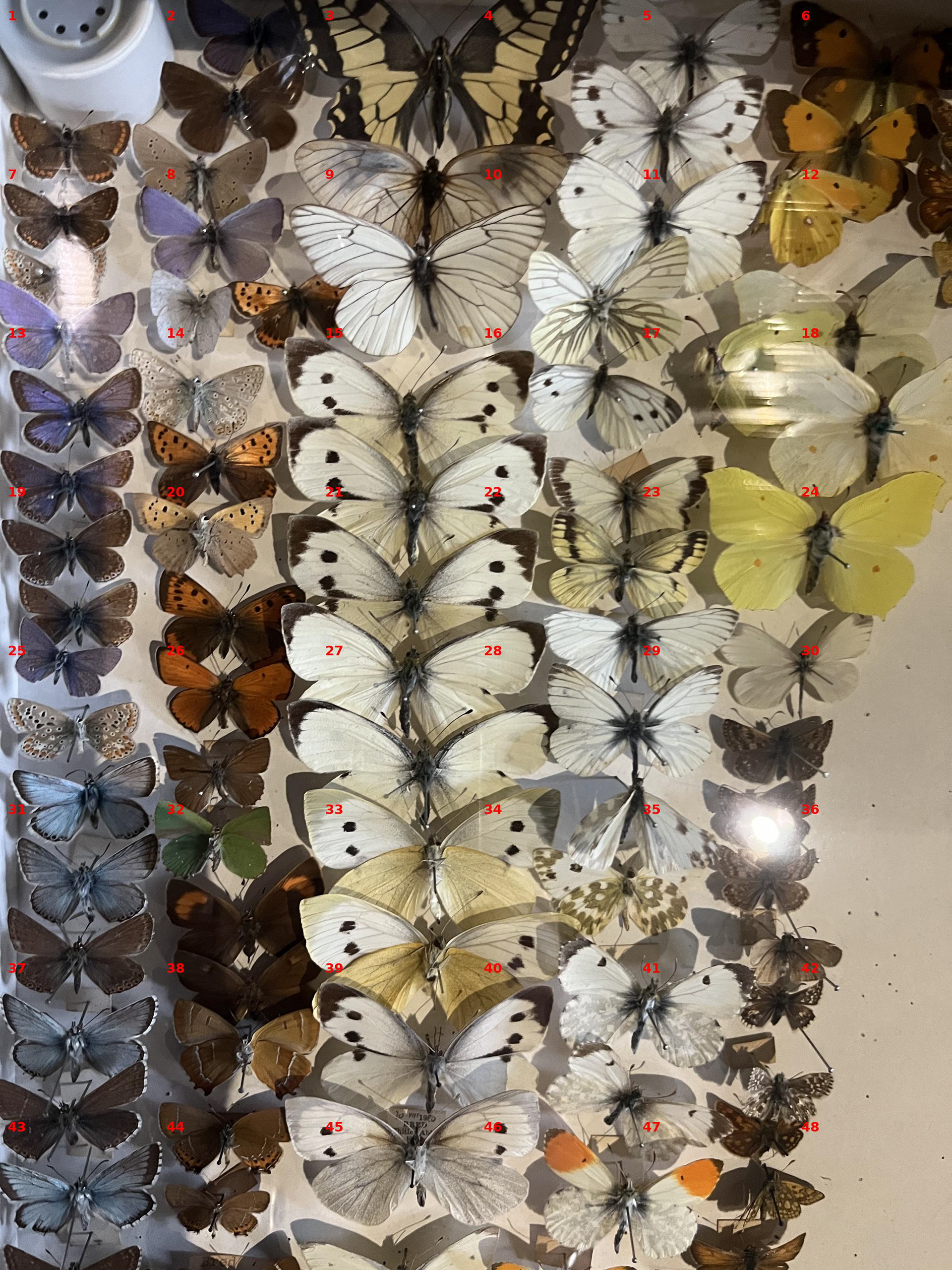
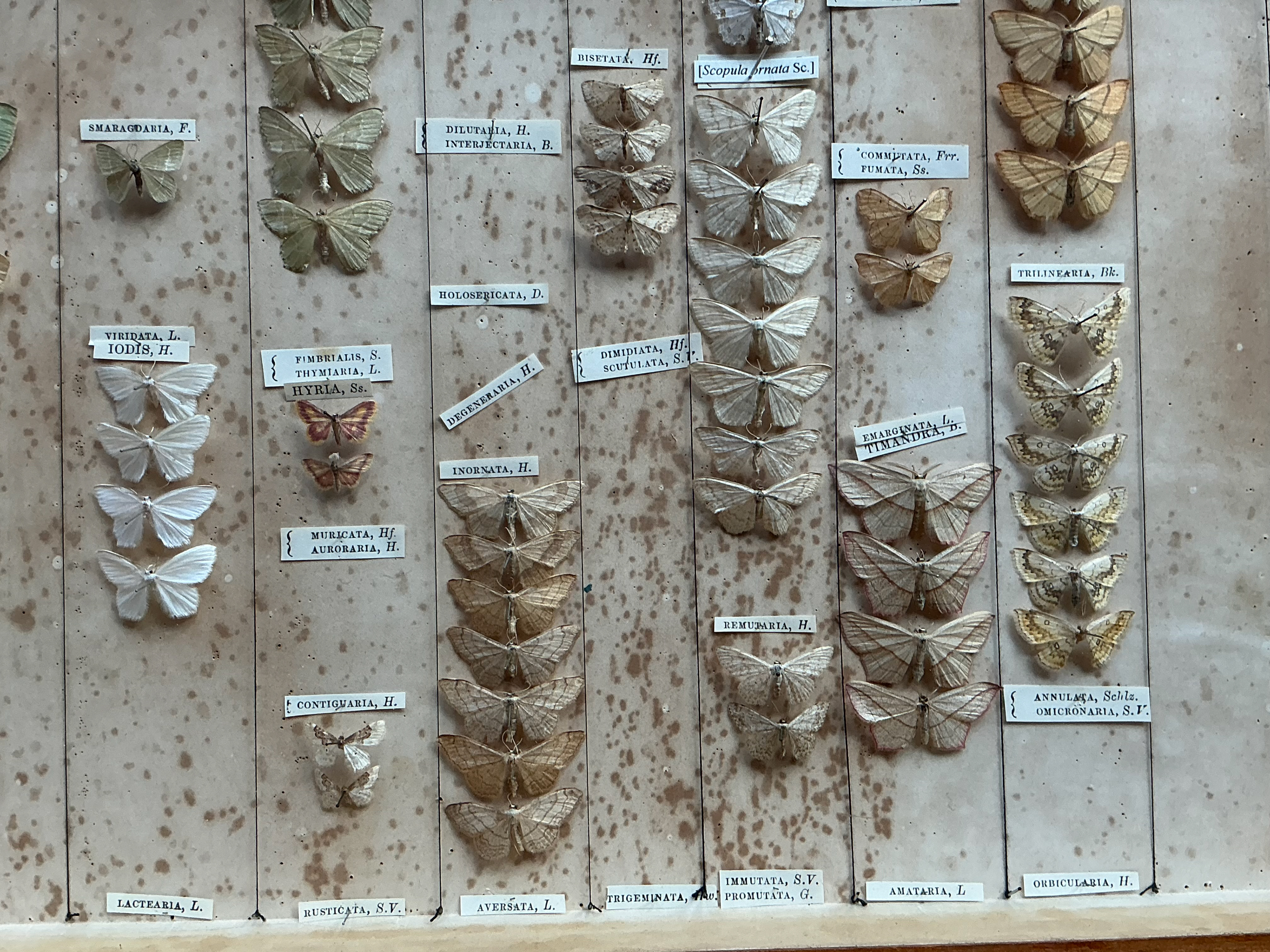
Visit to to the stroud Museum to see the collection of butter, butterflies and moths that they had.
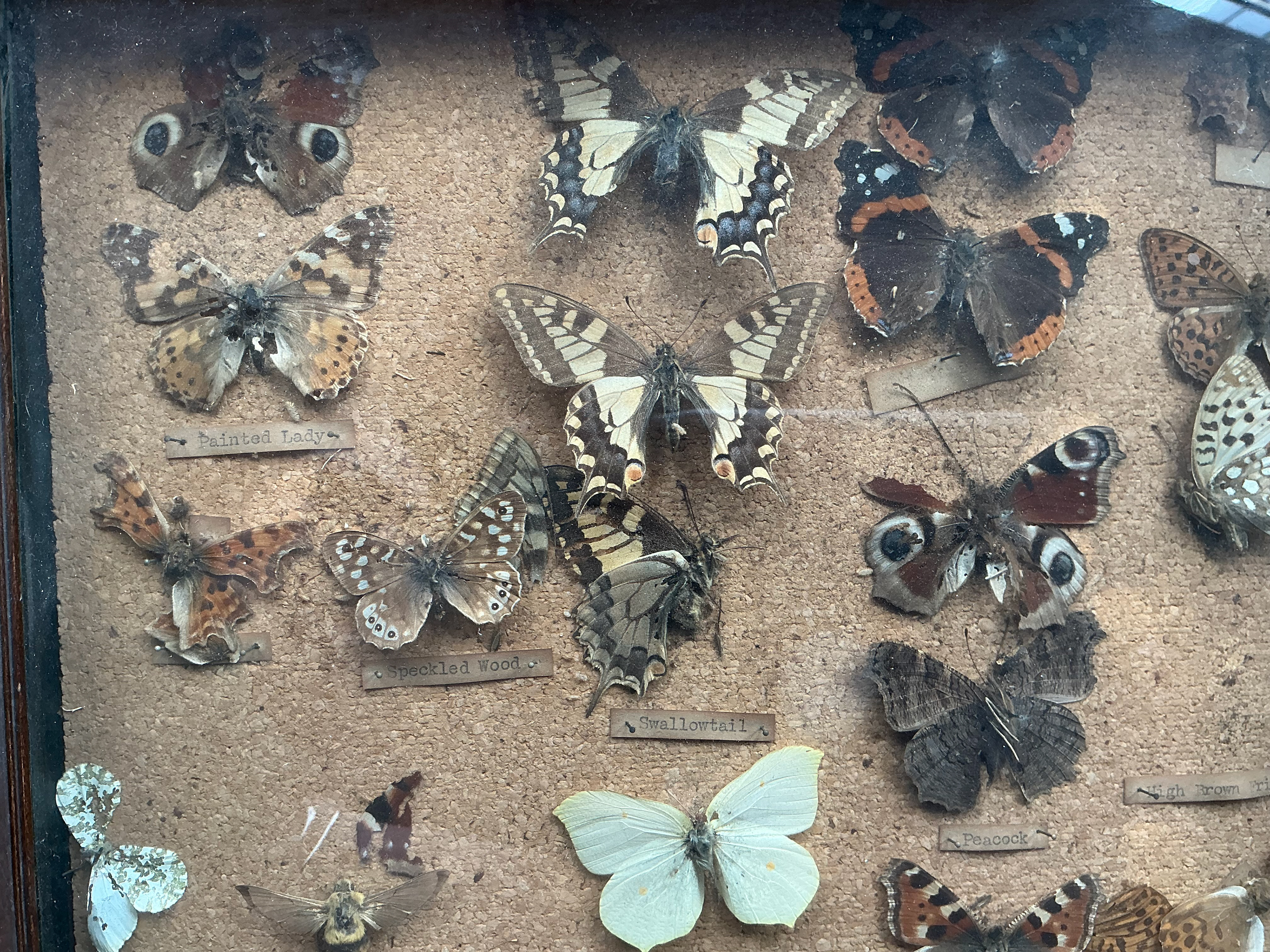
A lot of of the ones I looked at that I found more interesting where the old cabinets that were given to them that were possibly over 100 years old even The butterflies had turned to dust sometimes although these were not the prettiest of images I found there were the most relevant for my look into the decline of Butterflies in the last hundred years.
They have been so kind to accommodate me with my butterfly research at stroud and showing me all of their collection individually and actually getting extras out for me, I was very happy with their communication.
Zoe who I saw was happy to get any collectors out for me in the future, I may go back and shoot a couple of drawers that I liked with a better camera.
One of the issues I had was I used a new iPad and it had a scan scanning setting so I thought I was scanning lots of papers and images however I didn’t realise I was to press the TIC button on the right so I lost quite a few images but it was fine. I had plenty. And learnt a lesson. The images I took on my camera where more for looking at measurements and amounts and looking at what varieties they were and the dates that they were available, I have been able to categorise the Butterflies the English ones that I’m interested in. When it comes to tropical I will look into them also however for my project I’m trying to stick with British Butterflies only.
When searching it, I’ve been told that museums wish they had collected more samples although these are specimens and it’s always better to see the real thing in real life in my opinion it is really interesting to find out what butterflies were prevalent at the time that these were collected often dating back from forties to sixties and the 1990s. As mentioned before there is one or two cabinets that are possibly 100 years old.
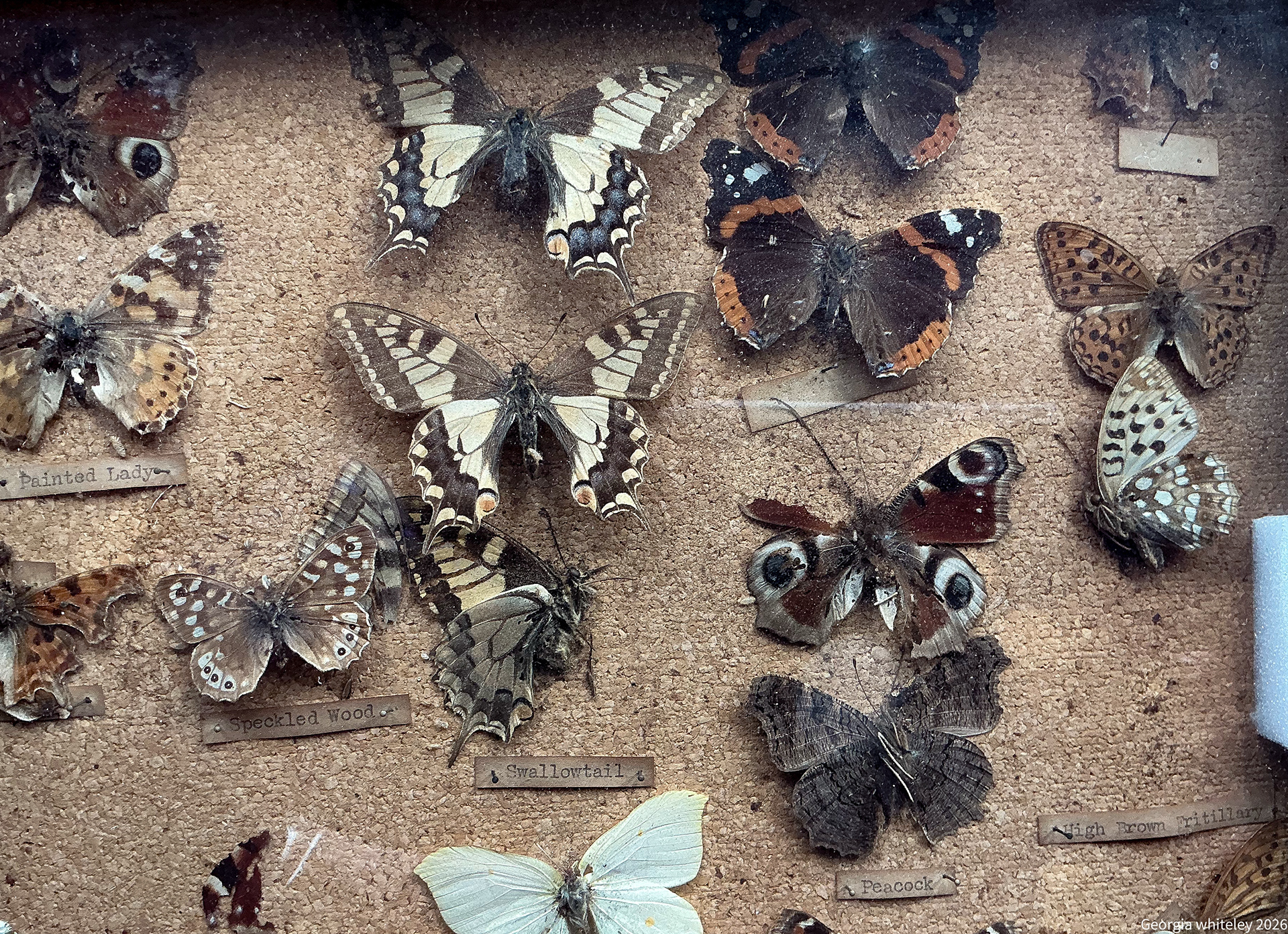
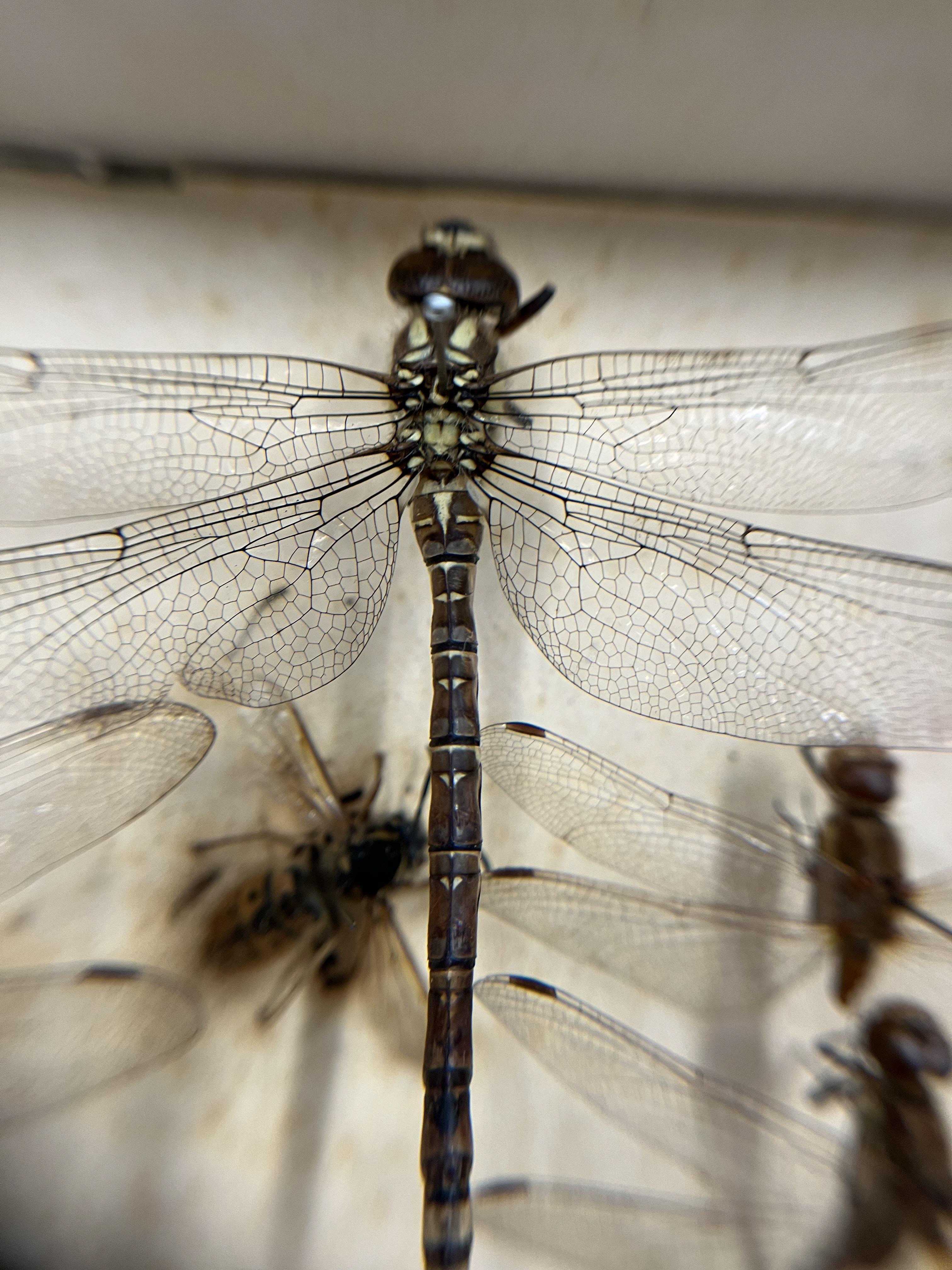
My favourite image is below. Butterflies 100 yrs old. I feel that I’d like to go to photographs again with Medium format but it shows how time has decayed the butterflies obviously but how without being looked after by the glass and the special chemicals and being looked after by us with our butterfly conservation work in the UK these butterflies will not last.
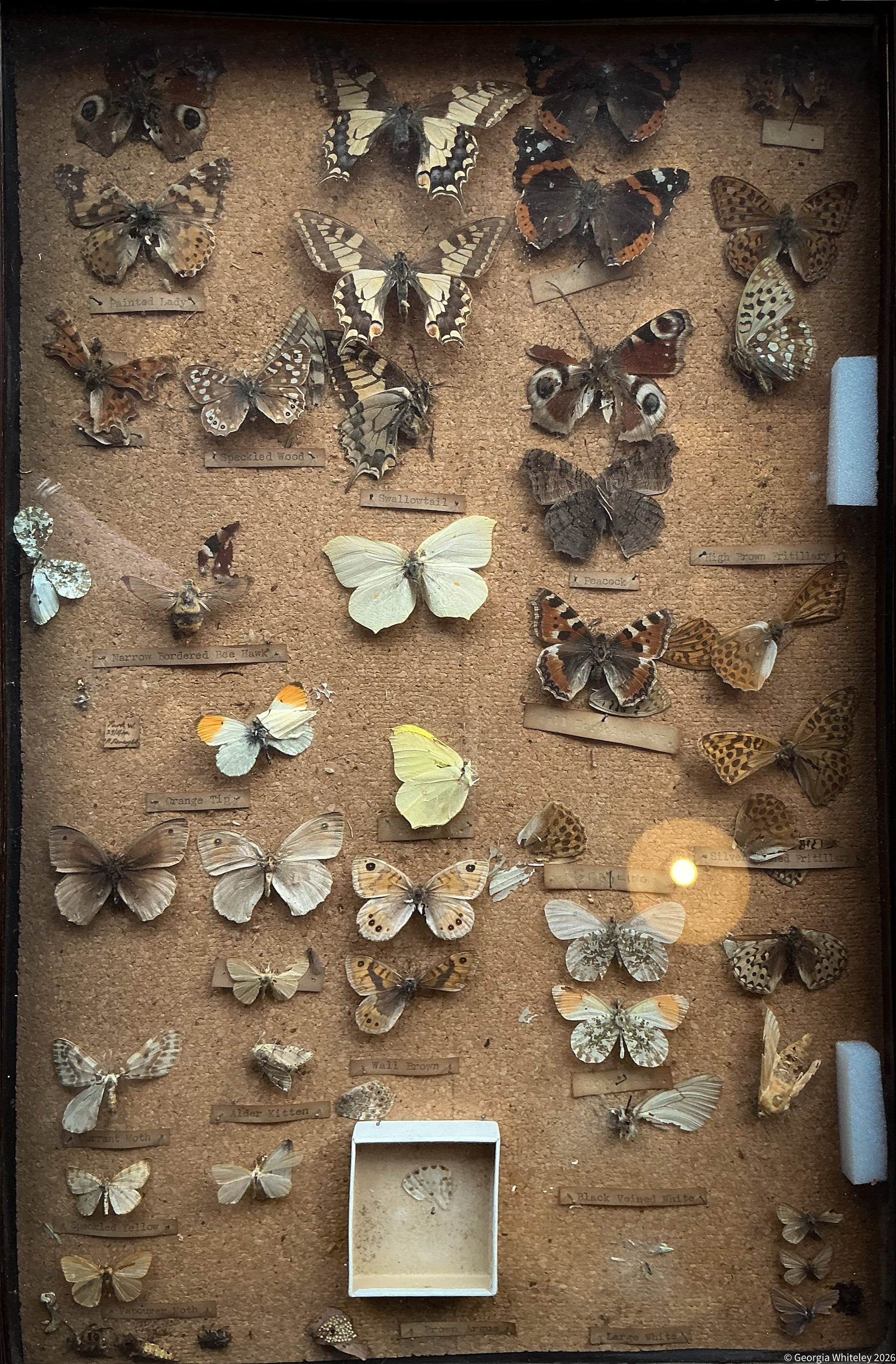
Butterflies 100 yrs old stroud Museum 2026 G.Whiteley